
Sleep smarter this World Sleep Day: The Habits and Foods That Make the Difference
BEAUTY, WELLBEING & PARENTHOODFERTILITY, PREGNANCY & POSTPARTUMFOOD & DRINK
Today, on World Sleep Day, we are shining a spotlight on the vital role sleep plays in our overall health and wellbeing. Yet in a world of constant demands, many of us struggle to switch off properly, let alone achieve the deep, restorative sleep our bodies need.
While we rest, the body is anything but idle. Cells repair everyday damage, energy stores are replenished, the brain processes information and the gut microbiome gets to work. Quality sleep is not a luxury. It is one of the most powerful tools we have for protecting long term health.
So how do we help the body reach a state where deep sleep comes more easily?
According to Dr Lucy Williamson, a registered nutritionist and gut health expert, the answer often begins in the gut.
“As a nutritionist, I usually begin with food. Yet over the years I have seen that sleep is just as essential, partly because of the extraordinary link between our gut and our brain. This connection, known as the Gut–Brain Axis, plays a crucial role in how we sleep, how we feel and how our digestive system functions.”
Often referred to as the body’s “second brain”, the gut actually evolved before the brain. It communicates through a constant two way flow of information, much of it travelling from the gut to the brain and heavily influenced by the health of our microbes.
This helps explain why emotions can trigger digestive sensations, such as the familiar butterflies before a big event, and why sleep problems, low mood and digestive discomfort often occur together. Changes in the diversity of beneficial gut bacteria are frequently involved.
The Gut–Brain Axis works through three key pathways.
The nerve route
The vagus nerve is central to our body’s calming response and counters the fight or flight state. With around 500 million nerve endings throughout the gut, it detects inflammation and chemicals produced by microbes and relays that information directly to the brain. Because it slows heart rate and promotes relaxation, practices such as breathwork and gentle movement can activate the vagus nerve. Managing stress in this way is essential, as stress is one of the biggest disruptors of both gut health and sleep.
The hormone route
The gut acts like a miniature pharmacy. Trillions of microbes in the large intestine produce thousands of compounds known as postbiotics. These influence many natural processes, including sleep.
For example, gut microbes produce vitamin B6 and help digest tryptophan, a protein building block found in food. Both are needed to create melatonin, the hormone that regulates sleep.
Foods that support this process include:
Vitamin B6: fish and dark leafy greens such as watercress, spinach and broccoli.
Tryptophan: tofu, fish, dairy products especially cheese, quinoa, buckwheat, meat and eggs.
Calming herbs: chamomile, lavender and oat flower, ideal as an evening herbal tea.
Sour cherries: naturally contain melatonin, with some research suggesting they can improve sleep quality. A sour cherry mocktail could be a smart alternative to an alcoholic nightcap.
Gut microbes also produce around 50% of the body’s dopamine and support serotonin production, both closely linked to mood and wellbeing. By contrast, chronic stress increases cortisol, which can inflame the gut and weaken its protective barrier. It is one reason why ongoing stress has such a profound impact on both sleep and digestion.
The inflammatory route
Around 70% of the immune system is located within the gut wall. The microbiome helps regulate inflammation throughout the body. When inflammation rises, the vagus nerve detects it and signals the brain, affecting both mood and sleep quality.
This connection helps explain why conditions such as IBS often coincide with poor sleep and dips in mood. Inflammation does not always mean illness. Even a single high sugar or high fat meal can temporarily raise inflammation levels. While occasional indulgence is unlikely to cause harm, regular patterns can gradually take their toll.
With World Sleep Day here, it is an ideal time to adopt habits that support both the gut and the Gut–Brain Axis:
Include fermented foods little and often, such as live yoghurt, kefir and aged cheeses like Gruyère.
Manage stress daily with short yoga sessions, breathwork or simple moments of self care.
Eat a rainbow of plants, particularly bitter brassicas rich in antioxidants. Mushrooms including reishi, shiitake and lion’s mane are also thought to promote relaxation and improve sleep quality.
Move regularly, as exercise supports the microbiome and emotional wellbeing.
Hydrate earlier in the day and avoid heavy meals late at night. Aim for a gentle 12 hour overnight fast, for example 8pm to 8am, to give the gut time to rest. Herbal teas and water in the evening are fine.
Reduce caffeine, alcohol and sugar before bed. Coffee, chocolate and breakfast tea all contain caffeine. While red wine and cider contain antioxidant polyphenols that may support gut health, this applies only in moderation. Alcohol free options such as kombucha, a sparkling fermented tea, can be a useful alternative.
Improving sleep does not always require drastic change. Often it begins with small, consistent shifts that calm the nervous system and nourish the gut. This World Sleep Day, a few thoughtful adjustments could be the difference between restless nights and waking up truly restored.
Recipes
Lucy has developed some gut healthy recipes that embrace her advice and so help aid restful sleep.
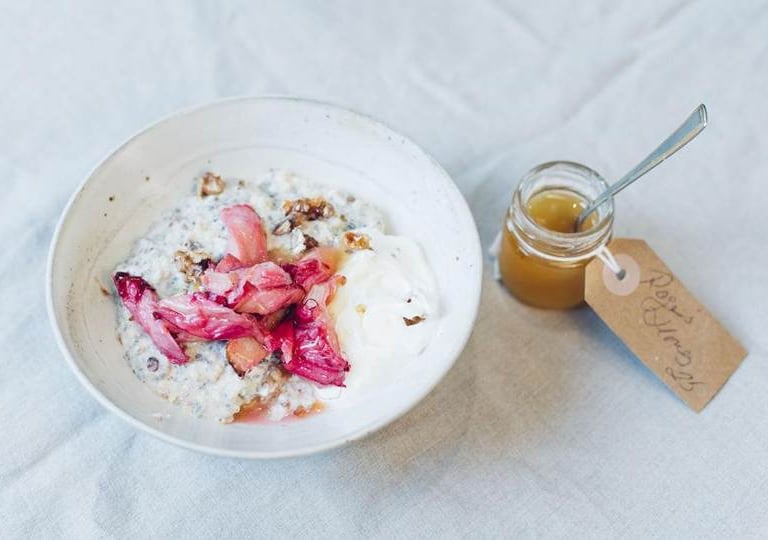
Overnight Oats and Chia Seeds Soaked with Roasted Rhubarb
This is really two recipes in one as you can also use the dry mix as a lovely muesli! You might want to buy organic oats to help reduce levels of pesticide residues which can play havoc without gut health. This is a lovely way to enjoy our early rhubarb too with its fibre and antioxidants.
Serves 4:
Use a 1L kilner jar.
Oven temperature: 160 degrees
Ingredients:
400ml Milk Kefir
60g chia seeds
a pinch of cinnamon (for sweetness)
Oats and barley flakes (enough to fill 1/3rd of the jar)
A sprinkle each of: Oat bran, ground flaxseed, raisins, mixed seeds and chopped walnuts
1 apple grated (or chop in 2 halves of pear from the tin)
Honey
Salt & Pepper
2 sticks of British rhubarb
Method:
Mix all the dry ingredients together in the kilner jar then add the kefir and grated apple. Give everything a good stir and leave in the fridge overnight. Chia seeds will swell to ten times their size!
Chop the rhubarb and lightly roast in the oven with just a little cold pressed rapeseed oil for 10 minutes or until a bright pink colour. Add a drizzle of honey to it once cooked.
Good to Know - Chia seeds are a 'complete' protein - many plant proteins are 'incomplete' ie they don't contain all the essential protein building blocks (amino acids) that we need. They're also rich in fibre, so make for a very filling breakfast bowl with low calorie content.
To Serve - enjoy your soak with a portion of bio live yogurt for extra probiotic goodness and top with the roasted rhubarb. Of course, you can adjust your fruit topper according to what’s in season or use frozen fruit like red currants or raspberries.
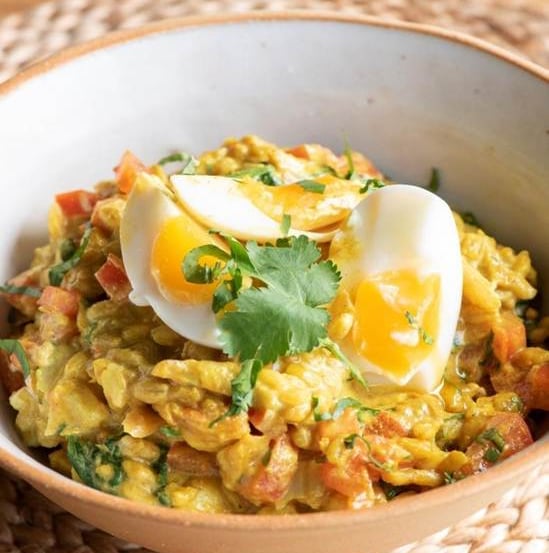

Hearty Pearl Barley Kedgeree
Using barley is a great way to add fibre to nurture gut health and source British too!
White sea fish such as haddock is a great source of high-quality protein for muscle strength and anti-inflammatory, mood boosting Omega 3.
Serves 4
Prep time 10 mins
Cook time 40 mins
Ingredients
500g smoked haddock (approximately 1 side)
500ml full fat milk
2 bay leaves
2 free-range eggs
150g pearl barley
1 onion, finely chopped
25g butter
1 red chilli, deseeded and finely chopped
2 cloves garlic, crushed
20g fresh ginger, grated
2 tbsp curry powder
1 tsp ground turmeric (or fresh, finely grated)
150g baby spinach leaves, washed
2 tomatoes, diced
30g fresh coriander, finely chopped
150ml water
Salt and pepper
1 lemon, juiced
4 spring onions, finely chopped (optional)
100g Dairy Greek Yoghurt
Glug of rapeseed oil
Method
First poach the smoked haddock in a shallow, non-stick pan (with a lid) and pour over the milk. Add bay leaves. Cover and place on a medium heat, allow the milk to come up to a gentle simmer and cook for 10 minutes until the fish flakes easily.
Remove the fish from the pan and set to one side to cool. Reserve the milk. Wipe out your pan ready for the next stage.
Meanwhile boil your eggs for 7 minutes. Remove and place into a bowl of cold water to cool. Peel and quarter the eggs.
Add the butter and rapeseed oil to your pan (2) and cook the finely chopped onion gently for 5 minutes until translucent. Add garlic, chilli & ginger. Cook for 5 minutes.
Add the curry powder and turmeric. Stir frequently to ensure it doesn’t stick. Cook for another 5-10 minutes until nicely aromatic. Add the pearl barley and stir well.
Slowly start adding the reserved milk in stages, allowing the barley to absorb the liquid in between additions and stirring frequently (as you would with a risotto). Keep going until all the milk is added and then continue with the additional water. The barley will take about 25 minutes to cook through.
Finally add the diced tomatoes, spinach and half the coriander. Flake in the smoked haddock (discard the skin). Stir well and cover to allow the spinach to wilt down and the fish to heat through. Season with S&P and the lemon juice.
Turn off the heat, stir through yoghurt and then garnish with the eggs, reserved coriander and chopped spring onions.
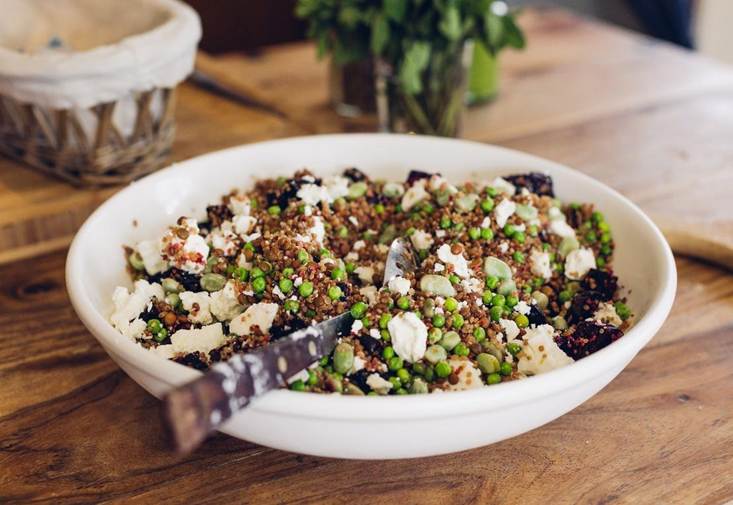
Quinoa Lentil Lunch Bowl
I love being able to vary this salad according to what greens are available seasonally and also flexibility on toppings - goat cheese, nuts and seeds - what’s yours?
Prep: 5 mins. Cooking 25 mins or less if you can multitask!
Serves 4 as a side or light lunch
Ingredients:
1 cup coral whole (coral) lentils (these keep their shape really well)
1 cup quinoa
juice of half a lemon
2 spring onions finely chopped
100g broad beans (frozen work well here too) or 50:50 with frozen peas too
100g feta cheese, crumbled
Fresh herbs - mint should be available and adds wonderful flavour
1 roasted beetroot chopped
4 tbsps green pesto (either bought or my recipe)
4 tbsps extra virgin olive oil
Salt and Pepper
Optional: bunch of asparagus (if available - comes into season nice and early)
Method:
Cook the coral lentils until tender - about 15-20 minutes simmering either in salted water or use a nice chicken or vegetable stock. (whole lentils hold their shape well). Drain and set aside to cool. At the same time
At the same time cook a batch of quinoa - save time and cook double so you have a batch in the fridge for other recipes. Pop the quinoa in a pan over heat and toast gently shaking it for 2 mins. Add twice the volume of cold water. It will bubble up. Cover and simmer for 10 minutes. Remove from the heat and leave, covered, for a further 10 minutes.
Cook the broad beans (and peas) and plunge straight into cold water so they keep their colour.
Mix the lentils, beans, chopped herbs, and spring onions together. Add the lemon juice & olive oil and season to taste.
Partly mix through the green pesto and drizzle over some extra virgin olive oil.
Steam the asparagus (if using) lightly for 8 minutes until tender and serve on the top
Stir through crumbled feta, chopped beetroot and add extra mint on the top.
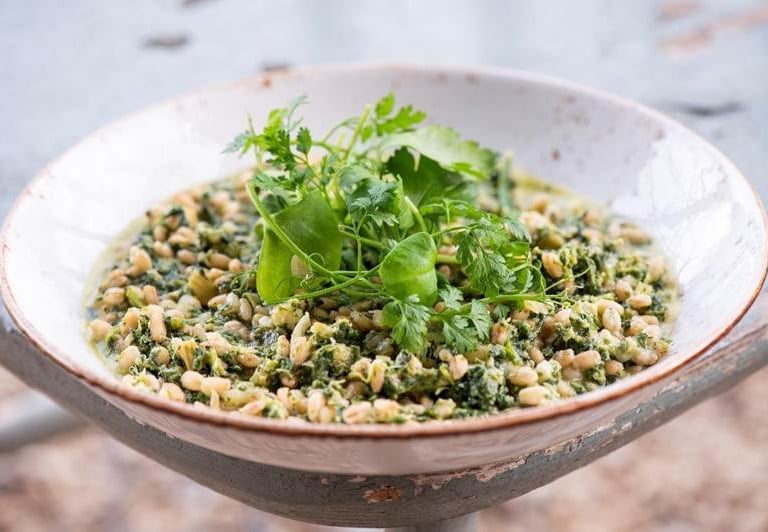
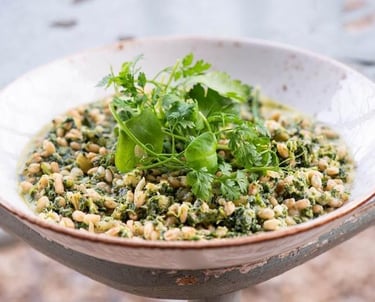
Pearl Barley Seasonal Risotto
Risotto is a great base recipe - you can use other seasonal veg or add toppers like goats cheese or chicken pieces, but this simple recipe is tasty alone too!
Serves 2
Prep time:
Cooking time:
Ingredients:
200g pearl barley
1 onion, finely chopped
3 garlic cloves, crushed
50g butter
1 Tbsp of cold pressed rapeseed oil
2 celery sticks, finely chopped
150ml white wine
500ml good quality chicken or vegetable stock
1 lemon, zest and juice
100g grated parmesan cheese
Salt and pepper
Seasonal Vegetables:
160g watercress and spinach (or just watercress)
400g asparagus, washed and chopped into 3cm lengths
120g frozen peas
Good handful of summer herbs: chives, dill, flat leaf parsley, and mint- finely chopped
Method:
Place a non-stick pan over a low heat, add 25g butter and rapeseed oil. Add the finely chopped onion and cook gently for 5-10 minutes until translucent (but not coloured), then add the garlic and celery, cook for a further 5 minutes.
Add the pearl barley and stir well to ensure it is coated in the butter/oil.
Keeping the heat on medium, start adding in the stock, stirring frequently. Wait for the majority of the liquid to be absorbed before gradually adding more.
The barley will take about 25 minutes to cook through, and you will be gradually adding liquid throughout. After 15 minutes of cooking add in the chopped asparagus if using!
Once the pearl barley is cooked, stir through the chopped watercress, cooked peas, chopped herbs, grated cheese, lemon zest and juice, and seasoning.
Cook for a couple of moments stirring continuously, then turn off the heat, place on a lid and leave it for 5 minutes to allow the flavours to settle. Remove the lid then taste and check seasoning. Add the rest of the butter at this point and mix through.
Garnish with cheese shards and herbs.
For more information about Lucy and for more gut healthy recipes, visit www.lwnutrition.co.uk
Ollēdi © 2026
Reframe your inbox
Subscribe to our newsletter and never miss a story.
We care about your data in our privacy policy.