
Growing Resilience: What Soil Health Can Teach Us About Our Own Wellbeing
FOOD & DRINKBEAUTY, WELLBEING & PARENTHOOD
With Christmas behind us and the long stretch of winter ahead, many of us start the year feeling like we need a little extra stamina to push through January. But resilience is not just about being mentally tough or "digging deep." Increasingly, it involves supporting our health in a way that helps our bodies cope better with whatever the colder months bring.
A new approach to wellbeing is gathering momentum. It focuses on reconnection and restoration, and ultimately strengthens the body from the inside out. At the heart of this shift is the science of gut health.
Registered nutritionist and gut health specialist Dr. Lucy Williamson explains:
"It is becoming clearer that when we nurture our beneficial gut microbes, they return the favour by supporting our overall health, including our mental wellbeing."
There is also a growing movement looking deeper, right down to the soil our food comes from. According to Lucy, we are beginning to better understand how soil health and human health are intertwined. Foods grown in rich, biologically active soils, such as those produced through regenerative or organic farming methods, often contain more diverse microbes and higher levels of protective nutrients and antioxidants. These compounds help fuel the microbes in our gut, meaning that when we look after the biodiversity beneath our feet, we indirectly support the biodiversity within us.
Nature might not always look perfectly tidy, but its systems are incredibly effective. Healthy soil teems with life, with around 10 billion microorganisms in a single teaspoon. Our own gut microbiome mirrors this complexity, hosting more than 100 trillion microbes. Whether in soil or in the human gut, these tiny organisms serve similar purposes:
• They help build resilience (immunity)
• They unlock nutrients
• They drive essential biological processes
Lucy notes that "resilience" is a word we are likely to hear more of this year. She uses farming to illustrate the point: in farming systems where pesticides are not used, plants must strengthen their own natural defences. They do this by producing more antioxidants such as polyphenols. These compounds act as the plant’s immune system and also serve as powerful nourishment for our gut microbes.
Two carrots might look identical, but the one grown in healthier soil can contain far more of these beneficial compounds. If you have ever tasted a freshly dug carrot from a garden, you know the difference. Foods grown this way do more than feed us. They help cultivate resilience in our own bodies.
So how do antioxidants contribute to our wellbeing?
Since more than half of the immune system sits around the gut, our gut microbes play a central role in educating and regulating our immunity. Supporting them, especially during winter, helps strengthen our natural defences. Eating antioxidant rich foods is one of the four key steps Lucy recommends for nurturing gut health. Her advice includes:
• Eating a wide range of plant foods to maximise prebiotic fibre
• Choosing colourful, antioxidant rich ingredients such as watercress, onions, garlic and herbs
• Opting for minimally processed foods, for example sourdough instead of mass produced bread
• Including small daily servings of fermented foods such as kimchi, kefir, kombucha, yogurt or cheese
• Adding pulses and beans for sustainable fibre and protein
To make this easier, Lucy has created three recipes designed to help build resilience this January.
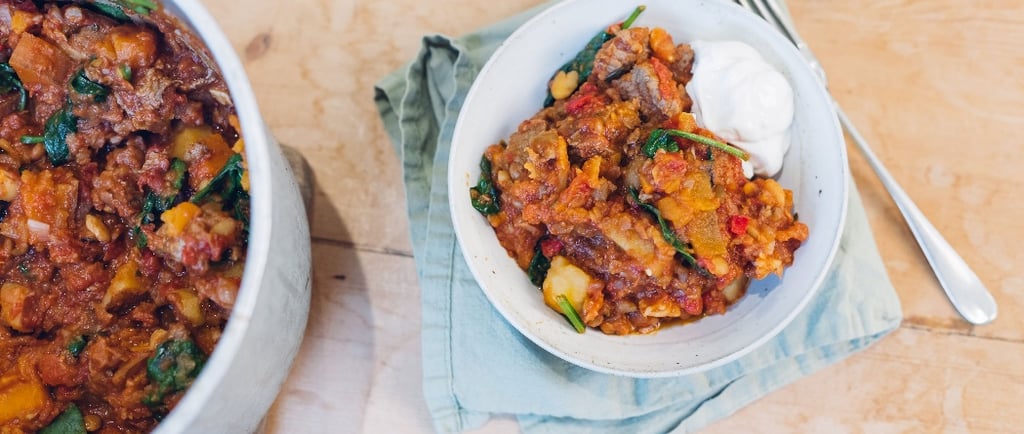
Grass Fed Beef and Bean Chilli
This chilli is a great example of how plant rich meals do not need to be meat free. Using 100 percent grass fed beef alongside a remarkable 14 different plant ingredients, it is packed with antioxidants, fibre, herbs, spices, and pulses, all of which help support gut health. Beans and lentils also stretch the meat further, making it a budget friendly winter staple.
Serves 6
Ingredients:
• 500g 100 percent grass fed or pasture fed diced beef
• 150g mixed dried lentils (such as red and coral lentils)
• 1 tbsp cold pressed rapeseed oil
• 1 large onion
• 2 garlic cloves
• 1 large grated carrot
• 1 tbsp tomato purée
• 1 red chilli
• 1 tbsp ground cumin
• 1 tsp chilli powder
• 1 tbsp ground cinnamon
• 1 tsp cocoa powder
• 2 tbsp plain flour (white or spelt)
• 2 tins chopped tomatoes
• 1 tin kidney beans
• Fresh oregano and rosemary
• Optional: paprika, splash of red wine, carlin peas
• Salt and pepper
Method:
Heat the oil and sauté the onion until translucent.
Add the chilli and garlic.
Stir in the beef and cook until browned.
Add tomato purée, spices, cocoa, lentils, carrot, flour and tinned tomatoes.
Bring to a boil, then simmer for about 45 minutes.
Add kidney beans and heat through.
Season and serve with sourdough or soda bread and a fresh salad.
Ingredient notes:
• Choose pasture fed or organic beef for better nutrient profiles and welfare standards.
• Look for British grown pulses such as those from Hodmedod’s.
Nutrition highlights:
• Grass fed beef contains much more Omega 3 and more Vitamin E than conventionally raised beef.
• A wide variety of plants provides diverse fibres that benefit the gut.
• Bitter flavours such as onion, garlic and cocoa help stimulate gut health.
• Colourful ingredients supply antioxidants.
• Sourdough is easier to digest than highly processed bread.
Simple Homemade Ferment
This is an affordable and accessible way to incorporate fermented foods into your diet. It makes a great side dish or works well paired with cheese and crackers.
Makes 1 litre
Ingredients:
• 500g white cabbage
• 500g carrots
• 1 red skinned apple
• 2cm fresh ginger
• 2 tbsp sea salt
Method:
Sterilise a 1 litre Kilner jar.
Thinly slice the vegetables and apple, and grate or spiralise the carrot.
Mix everything with the salt and massage for about 15 minutes until liquid is released.
Add the ginger.
Pack tightly into the jar, ensuring the vegetables are completely submerged.
Leave to ferment for 1 to 4 weeks out of direct sunlight.
Refrigerate after opening and use within 4 weeks.
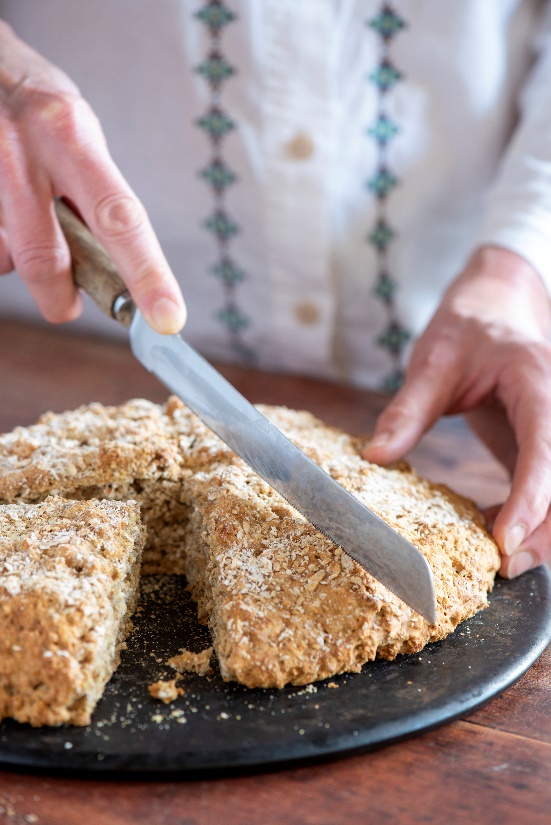
Easy Sharing Soda Bread
Quick to make and full of gut friendly oats, this soda bread requires no yeast and no rising time, and is ideal for busy days.
Ingredients:
• 250g self raising flour
• 250g wholemeal flour
• 80g oats
• 250ml milk (or half milk, half kefir)
• 150ml water
• Juice of half a lemon
• 2 tsp salt
• 1 tsp brown sugar
• 1 tsp bicarbonate of soda
• Olive oil
Method:
Preheat oven to 180 degrees Celsius (fan).
Mix the dry ingredients.
Combine milk, water and lemon juice in a jug.
Add liquids gradually to form a wet dough.
Shape into a 20 cm disc, score the top, brush with oil and sprinkle oats.
Rest for 10 minutes.
Bake for about 30 minutes until golden and hollow sounding.
Approaching health with resilience in mind benefits more than just our own bodies. It encourages us to choose food grown in ways that respect the planet and support farmers who work closely with the land. And just as nature thrives despite its occasional rough edges, we too can handle life’s challenges more easily when our inner systems are strong.
To learn more about Dr. Lucy Williamson’s work, including recipes and guidance on building resilience through food, visit www.lwnutrition.co.uk.
Lucy’s upcoming book, Soil to Gut, will be published in summer 2026. It explores how soil health shapes the food we eat and the microbes that influence our wellbeing, sharing stories from regenerative farmers and recipes that connect us back to the land.

Ollēdi © 2026
Reframe your inbox
Subscribe to our newsletter and never miss a story.
We care about your data in our privacy policy.