
Eating for Your Mood: The Summer Recipe Edit
FOOD & DRINKBEAUTY, WELLBEING & PARENTHOOD
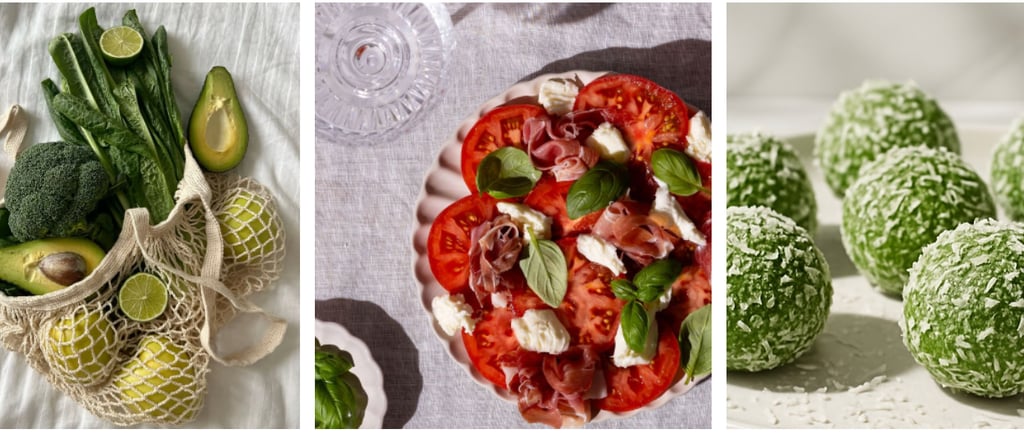
Summer is often sold as the happiest season of the year. Longer days, spontaneous plans and warmer evenings promise energy and freedom. Yet many people quietly experience the opposite. Disrupted sleep caused by heat, overbooked social calendars and fluctuating energy levels can leave even the most enthusiastic sun seeker feeling depleted.
Nutrition experts are increasingly turning their attention to the relationship between food and emotional wellbeing. Research exploring the gut-brain connection, blood sugar regulation and hydration is reshaping how we think about seasonal eating. Rather than focusing solely on calories or appearance, this new approach considers how meals influence mood, focus and resilience throughout the day.
The result is a more intuitive way of eating. Instead of rigid diet rules or complicated nutritional language, the emphasis shifts towards understanding how different foods support how we feel. During summer, when routines loosen and schedules become unpredictable, this philosophy feels especially relevant. Eating well becomes less about restriction and more about gentle support for both mind and body.
Summer Eating That Works With You
Warm weather places unique demands on the body. Appetite changes, sleep patterns shift and social commitments increase. Balanced meals that combine protein, fibre and healthy fats help stabilise blood sugar, preventing the dramatic highs and crashes that often accompany busy summer lifestyles.
Hydration also plays a central role. Seasonal produce such as cucumber, watermelon and berries naturally replenishes fluids while delivering vitamins linked to cognitive health and mood stability. Leafy greens contribute essential nutrients that support brain function, while omega-rich ingredients including seeds and oily fish help regulate inflammation and emotional balance.
Rather than chasing perfection, the goal is nourishment that fits real life.
Three Summer Bowls Designed to Support Mood
The Hormone Kitchen’s summer recipe edit embraces simplicity without sacrificing nutritional impact. Each dish is built around accessible ingredients that offer tangible benefits for energy, digestion and hormonal balance.
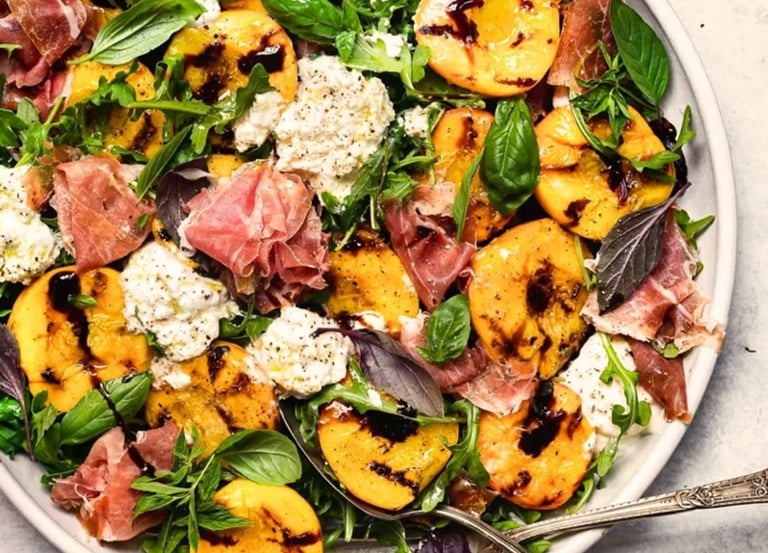
Peach, Prosciutto & Burrata Summer Bowl
Peaches, silky burrata, crispy prosciutto and herby quinoa come together in a warm-weather dream bowl. Fresh, light, and a little luxe. Takes 10 minutes:
Carbs 35g, Protein 19g, Fat 28g.
Zinc: pumpkin seeds support progesterone and skin health.
Vitamin C: peaches and lemon juice help collagen and iron absorption.
Healthy Fats: burrata and EVOO help balance blood sugar.
Fibre: quinoa and avocado help keep digestion smooth post-ovulation.
Base:
1 handful of mixed greens
85g of cooked quinoa
Toppings:
1 ripe peach
2 slices of prosciutto
1/2 burrata
1/4 slice of avocado
9g of pumpkin seeds
1/2 handful of fresh basil leaves.
Dressing:
15ml of extra virgin olive oil
15ml of lemon juice
5ml of dijon mustard
8g of raw honey (Optional)
1 pinch of salt & black pepper
Method:
In a bowl, begin by layering mixed greens and quinoa as the base. Then add sliced peach, avocado, torn prosciutto, and burrata on top, arranging them evenly for a balanced mix of flavors. Sprinkle pumpkin seeds and fresh basil over the salad to enhance texture and aroma. Finally, whisk together the dressing ingredients, drizzle it over the salad, and toss everything gently to combine before serving.
Glow Bowl with Grilled Halloumi
& Papaya Salsa
A summer inspired, radiant bowl of greens, quinoa, grilled halloumi, and a papaya-lime salsa to support collagen and skin clarity. 25 minutes:
Carbs 35g, Protein 22g, Fat 24g.
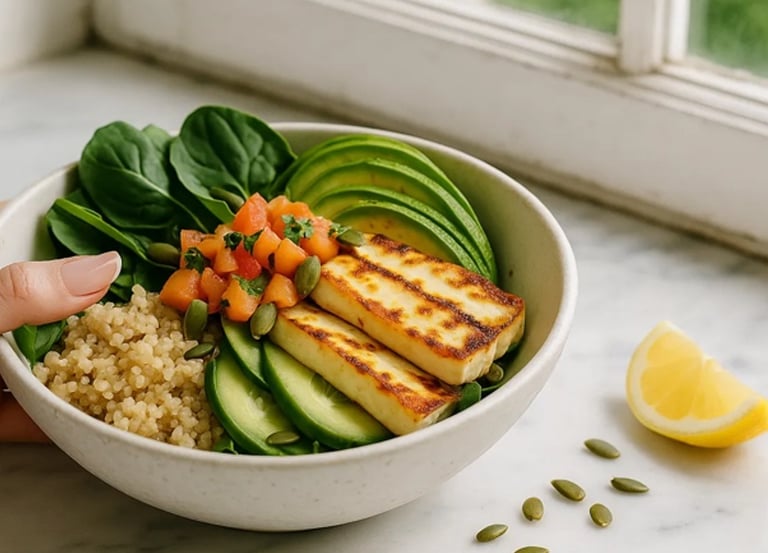
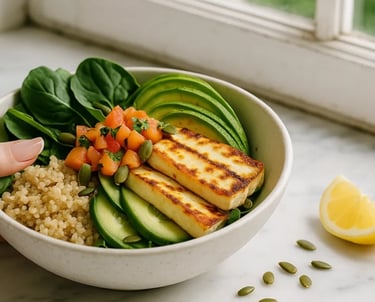
Digestive Support: quinoa and papaya aid gentle digestion and regularity.
Ovulation Boost: halloumi adds protein and calcium to support cervical fluid quality and energy during your peak phase.
Hormone Balance: Avocado and pumpkin seeds bring in healthy fats and zinc to support progesterone production later in your cycle.
Glowing Skin: Papaya is rich in vitamin C and beta-carotene to brighten the skin and support collagen.
Bowl:
38g of quinoa
4 slices of halloumi
1 handful of mixed greens
1/4 cucumber
1/2 slice of avocado
9g of pumpkin seeds.
Salsa:
1/2 slice of papaya
15g of red onion
1/2 squeeze of lime juice
15g of fresh coriander
1 pinch of sea salt
Dressing (optional):
5ml of olive oil
1 splash of lemon juice
1 pinch of black pepper.
Method:
Start by cooking the quinoa then set it aside to cool slightly. While it cools, mix all the salsa ingredients together in a small bowl and allow them to sit so the flavors can develop. Next, heat a griddle pan and cook the halloumi slices for 2–3 minutes on each side until they are golden and crispy. To assemble the bowl, layer the quinoa with greens, cucumber, and avocado, then add the grilled halloumi on top and spoon over the papaya salsa. Finish by sprinkling with pumpkin seeds and drizzling with dressing, if using.
High Protein Tuna Crunch Bowl:
(reinventing the trending spicy tuna sandwich)
A creamy, fresh, and satisfying protein bowl made with simple, nutrient-dense ingredients. The perfect lunch to reset your energy mid-week: high in protein, full of texture, and endlessly nourishing. 10 minutes:
Carbs 8g, Protein 34g, Fat 18g.
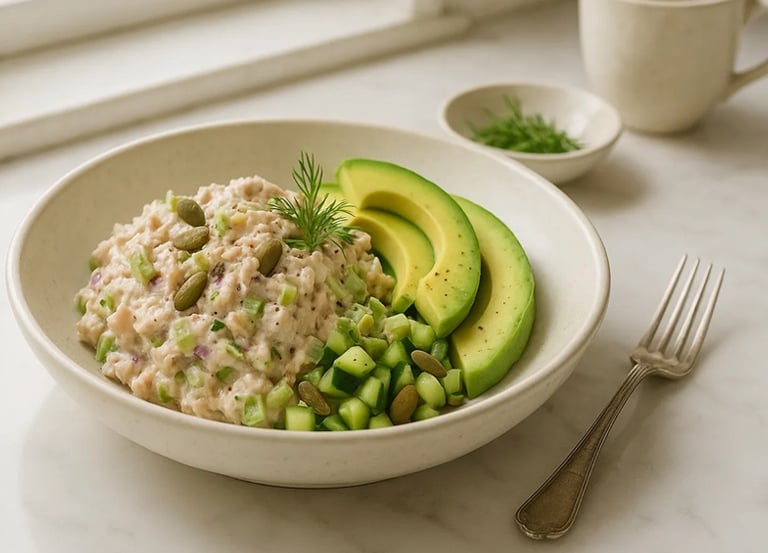
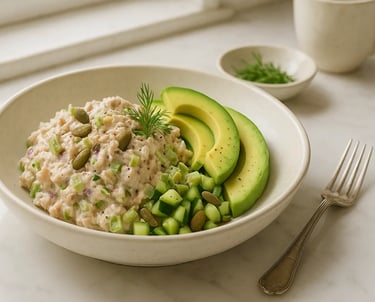
Protein: tuna and greek yogurt for muscle repair and hormone health.
Healthy Fats: avocado and seeds to nourish skin and balance energy.
Fibre: fresh vegetables to support digestion and gut health.
150g of tuna
30g of greek yogurt
1/2 red onion, finely diced
1/2 celery, finely diced
1/2 cucumber, chopped
1/2 avocado, sliced
1 squeeze of lemon juice
5ml of olive oil
1 pinch of sea salt and black Pepper
9g of pumpkin seeds or sunflower seeds
1 pinch of fresh dill or parsley, to garnish.
Method:
In a bowl, mix the tuna with Greek yogurt, lemon juice, olive oil, and seasoning until the mixture becomes smooth and creamy. Gently fold in the diced celery, red onion, and cucumber to add texture and freshness. Arrange avocado slices on top and sprinkle with seeds for extra crunch, then finish with fresh herbs and a little extra black pepper. Serve chilled, and enjoy on its own or with rice cakes or pitta if desired.
What to Eat Based on How You Feel
Seasonal eating becomes most powerful when it responds to emotional cues as much as physical hunger.
Hot nights that disrupt sleep call for lighter evening meals built around yoghurt, oats and leafy greens. These foods support digestion without overloading the body before rest.
Periods of low energy benefit from hydrating meals rich in fibre and protein, which help stabilise blood sugar and maintain focus throughout the day.
When social plans become overwhelming, simple grain bowls or familiar comfort foods prepared with nourishing ingredients can reduce decision fatigue and provide a sense of grounding.
Travel, changing routines or late nights may leave digestion unsettled. Fermented foods, diverse plant fibres and fresh vegetables help restore gut balance, an increasingly recognised contributor to mental wellbeing.
The Ingredients Supporting Summer Mood
Seasonal produce naturally aligns with emotional health. Berries contribute compounds linked to brain function, leafy greens deliver nutrients essential for cognitive clarity, and fermented foods support the gut-brain axis that influences mood regulation. Omega-rich foods such as seeds and oily fish assist with emotional stability, while water-rich fruits and vegetables combat fatigue caused by dehydration.
These ingredients do not require complicated preparation. Their power lies in consistency and variety rather than perfection.
About Sync With Georgia
Sync With Georgia is rooted in the principles of cycle syncing and gut-focused nutrition, encouraging women to nourish their bodies in alignment with hormonal rhythms. Through The Hormone Kitchen, recipes are tailored to different stages of the menstrual cycle, helping support natural oestrogen and progesterone balance through fibre-rich, nutrient-dense meals.
The platform also offers Everyday Plates to simplify meal planning across breakfast, lunch, dinner and snacks, alongside Sync Solutions, a collection of anti-inflammatory recipes designed to support skin health and balanced blood sugar. Practical guidance continues through Sync Tips, where Georgia shares everyday wellness habits such as preparing matcha, hydrating tonics and nourishing shakes. Structured Sync Plans provide targeted recipe collections for goals ranging from increasing protein intake to efficient meal preparation.
Together, the approach reflects a broader shift in modern nutrition. Food is no longer viewed purely as fuel or discipline. Instead, it becomes a daily tool for supporting mood, energy and long-term wellbeing.
For more information visit www.syncwithgeorgia.com or follow @syncwithgeorgia on Instagram.
Ollēdi © 2026
Reframe your inbox
Subscribe to our newsletter and never miss a story.
We care about your data in our privacy policy.